Breakneck: A High-Impact Display Typeface for Commanding Visuals
Fonts are more than just tools for communication; they’re visual statements that shape the identity of a brand, project, or message. In the world of display typography—where legibility at small sizes isn’t the priority, but boldness and presence are—typefaces like Breakneck rise to the top. Designed with intensity and purpose, Breakneck is a heavy-weight display font that captures the essence of raw energy, making it a compelling choice for those who want their designs to be noticed.
Origins and Inspiration
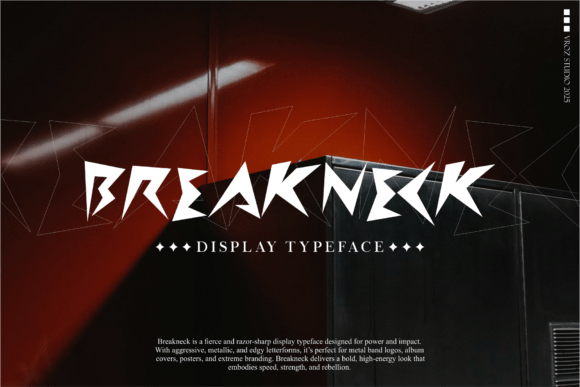
Breakneck draws its roots from the aggressive aesthetics of metal music culture. Its creators aimed to translate the genre’s sonic power into typographic form by emphasizing sharp angles, thick strokes, and an unapologetic attitude. This inspiration makes Breakneck stand out as more than just another display font—it’s a design asset that tells a story before a single word is read.
What Sets Breakneck Apart?
- Aggressive Geometry: The font features angular shapes and pointed terminals that give it a fierce look, ideal for high-impact visuals.
- High Contrast and Bold Weight: Each character is crafted with a strong emphasis on contrast between thick and thin areas, which enhances readability in large formats while maintaining a dramatic flair.
- Unique Character Set: Breakneck includes stylized glyphs and alternate characters that allow for customization and a distinctive feel in branding and design work.
- Dynamic Kerning: The spacing between letters has been carefully adjusted to maintain balance and rhythm, even when used in extreme cases like all-caps headlines.
Real-World Applications
Display fonts like Breakneck are not intended for long-form text or body copy. Instead, they shine in applications where first impressions matter most. For example:
- Band Names and Logos: Musicians and bands seeking a powerful, edgy identity can use Breakneck to create logos and banners that resonate with their audience.
- Metal Merchandise Design: From t-shirts to posters, Breakneck adds a layer of intensity and authenticity to merchandise associated with hard-hitting genres.
- Event Branding: Concerts, festivals, and other live events benefit from Breakneck’s commanding presence, especially in promotional materials and signage.
- Music Gear and Instruments: Guitar pedals, amplifiers, and other equipment often feature custom typography. Breakneck offers a bold, industrial look that aligns well with this niche.
- Marketing and Advertising: When launching products or campaigns that require a visceral reaction, Breakneck can serve as a visual anchor that reinforces the tone of the message.
Professional Observations
In evaluating Breakneck, one key consideration is how well it performs across different mediums. Used in print, digital screens, or even vinyl records, the font maintains its clarity and impact when scaled appropriately. However, due to its intricate details and heavy weight, it may struggle in low-resolution environments if not rendered correctly.
Another observation is its versatility within a broader design context. While Breakneck is inherently loud and assertive, it can coexist with softer, more readable typefaces in layered compositions. This allows designers to create balanced layouts where the headline commands attention, while supporting text remains legible and functional.
Who Benefits Most from Breakneck?
Breakneck is best suited for professionals and creatives working in fields that demand bold visual identities. This includes:
- Graphic Designers: Especially those specializing in event promotions, album art, or merchandise design.
- Entrepreneurs in Music Industry: Anyone involved in creating branded content for bands, record labels, or related ventures.
- Marketing Agencies: Looking to craft high-energy campaigns for lifestyle, fashion, or entertainment brands.
- Freelancers and Small Business Owners: Who need a standout font without compromising on quality or uniqueness.
- Bloggers and Publishers: Covering subcultures, music, or urban aesthetics where typography plays a central role in storytelling.
Strengths and Limitations
The strengths of Breakneck lie in its ability to convey strength and urgency through its visual language. It’s particularly effective when used sparingly—think of it as the lead vocalist in a song, delivering a punchy performance that sets the tone for everything else. Its aggressive lines and condensed structure also make it excellent for limited space, such as headers on websites or product packaging.
However, there are limitations to consider. Because of its complexity and density, Breakneck is not suitable for extended reading. Attempting to use it in body text or dense paragraphs will likely result in reduced readability and user fatigue. Additionally, while its stylistic variations offer creative flexibility, they may require some adjustment in layout to ensure harmony with other elements.
Usability and Flexibility
Breakneck is designed with usability in mind, despite its intense appearance. It supports a wide range of languages and special characters, making it accessible for international projects. The font file is optimized for both desktop and web use, ensuring smooth performance across platforms. For web designers, Breakneck can be implemented using standard web font technologies like WOFF and TTF, with minimal load time impact when used judiciously.
Flexibility is another strong point. The font works well in monochrome settings, where its stark contrasts become even more pronounced. It also holds up under color treatments, allowing for experimentation with gradients, overlays, and other effects that enhance its bold personality. Whether you're designing in Adobe Illustrator, Photoshop, or Figma, Breakneck integrates seamlessly into most design workflows.
Consistency and Reliability
Consistency is crucial in any professional setting, and Breakneck delivers reliable results when applied correctly. Its uniformity in stroke width and character height ensures that it looks cohesive even in complex compositions. That said, users should be cautious about overusing the font in multiple contexts without considering scalability and alignment issues.
Reliability extends to licensing as well. Depending on the source, Breakneck may be available under commercial licenses that suit both individual and business needs. Always verify the terms before deployment, especially in high-volume or multi-platform projects.
Practical Recommendations
If you're considering Breakneck for your next project, here are some practical recommendations to maximize its effectiveness:
- Use it for short, impactful phrases rather than full sentences or paragraphs.
- Pair it with simpler sans-serif or serif fonts for secondary text to maintain readability.
- Experiment with spacing and letterforms to find the right balance between aggression and elegance.
- Test it at various sizes and resolutions before finalizing print or web assets.
- Consider its cultural connotations—Breakneck is not neutral, and that can be both a strength and a constraint depending on your audience.
Examples in Action
Imagine a new band called "Ironclad" releasing their debut album. Using Breakneck for the title track name on the cover immediately signals the kind of sound and style they represent. Similarly, a skateboard company launching a line inspired by punk rock could use Breakneck in their product names to evoke rebellion and edge.
For event marketing, Breakneck could be the perfect fit for a festival named “Soundwave Clash,” appearing prominently on billboards, tickets, and social media graphics. The font's energy matches the excitement of the event, reinforcing the experience before attendees even arrive.
Long-Term Value and Presentation
Fonts evolve over time, and so do design trends. Breakneck’s longevity depends largely on how well it fits into current and future visual strategies. As long as the market values bold, expressive typography, Breakneck will remain a relevant and valuable tool. Its presentation is clean yet forceful, which means it won't date quickly when used thoughtfully.
From a long-term perspective, investing in Breakneck makes sense for anyone looking to build a strong, memorable visual identity. It’s not a background font—it’s a statement. And in today’s saturated digital landscape, standing out is more important than ever.
Effectiveness in Different Projects
Breakneck’s effectiveness varies based on the project scope. In a poster for a local metal concert, it might be the only font needed, dominating the entire layout. In contrast, for a larger website or magazine, it would likely serve as an accent typeface, used in headlines or pull quotes to highlight specific content.
Its performance is also tied to the target audience. If your design speaks to a demographic that appreciates edgy, unconventional styles—such as Gen Z audiences interested in alternative culture—Breakneck could hit the right note. But if your project requires a more corporate or minimalist aesthetic, it may not be the best fit.
Final Thoughts
Breakneck is a typeface that doesn’t shy away from its purpose. It’s built for impact, not subtlety. That makes it a powerful choice in the right contexts, particularly when the goal is to communicate strength, urgency, or rebellion. Like any display font, it should be used intentionally and strategically, complemented by other design elements to maintain balance.
Whether you're a designer, marketer, or content creator, Breakneck offers a unique opportunity to amplify your message visually. It’s not for every project, but for those that demand a bold, no-holds-barred approach, it’s hard to beat. Just remember to let it breathe—use it where it can truly command attention, and avoid stretching it beyond what it was designed to handle.