Andromeda: A Display Serif Typeface That Merges Elegance and Modernity
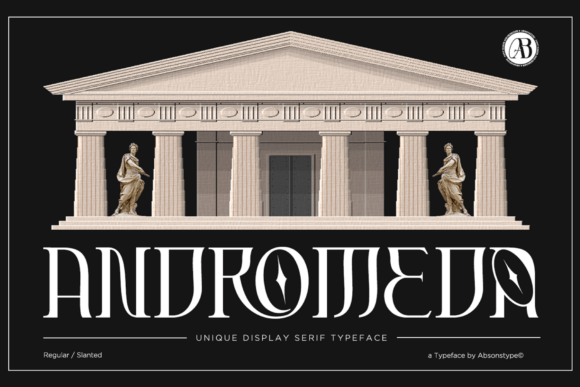
Typography plays a crucial role in visual communication, shaping how messages are perceived across different mediums. Andromeda is a display serif typeface that stands out for its ability to balance classical design elements with contemporary innovation. Designed to capture attention while maintaining readability, it offers unique features such as tall, graceful letterforms, high contrast strokes, and cosmic-inspired ligatures. These characteristics make it particularly well-suited for editorial layouts, luxury branding, posters, and logo design.
What Makes Andromeda Unique?
At first glance, Andromeda appears to be rooted in traditional typography, drawing inspiration from the grandeur of historical serif fonts. However, it diverges by incorporating modern stylistic flourishes that give it an edge over more conventional options. Its tall x-height contributes to strong vertical presence, making it ideal for headlines or short text blocks where impact is key. The high contrast between thick and thin strokes adds a sense of drama and sophistication, especially when used at larger sizes.
One of the most distinctive features of Andromeda is its cosmic-inspired ligatures. These elegant combinations of letters create a subtle but noticeable visual rhythm, enhancing the overall aesthetic without overwhelming the reader. Such details elevate the font beyond standard display serifs, offering a nuanced character that can add depth to creative projects.
The font also comes in two styles—Regular and Slanted—allowing designers to adapt their typographic choices depending on the tone they want to convey. The Regular style exudes calm authority, while the Slanted version introduces a dynamic angle that can evoke movement or urgency, depending on context.
When to Use Andromeda
Andromeda shines in environments where both elegance and boldness are required. It’s frequently chosen for editorial layouts, including magazines, newspapers, and book covers, where it can serve as a headline font or even for short body text in print formats. In digital publishing, it works well in feature articles or blog headers, where its refined structure helps maintain legibility despite its decorative nature.
For luxury branding, Andromeda provides a timeless yet modern feel that aligns with high-end aesthetics. Whether used in packaging, stationery, or promotional materials, its sophisticated curves and strong contrast communicate exclusivity and craftsmanship. In poster design, it brings a dramatic flair that can anchor the layout visually and guide the viewer’s eye toward important content.
In logo design, Andromeda offers a fresh take on serif-based identities. While many brands opt for minimalist sans-serif fonts for logos, this typeface proves that serif designs can remain relevant and impactful when executed thoughtfully. Its slanted variant, in particular, can add a touch of uniqueness to brand marks, helping them stand out in competitive markets.
Best-Fit Situations for Andromeda
- Editorial Design: Ideal for magazine spreads, newspaper headlines, and book titles where visual hierarchy and typographic richness are essential.
- Luxury Branding: Perfect for conveying refinement and heritage in fashion, beauty, or lifestyle industries.
- Poster Design: Great for event posters, exhibition banners, or artistic promotions that demand a striking visual element.
- Logo Creation: Suitable for brands seeking a classic yet contemporary identity, especially when paired with custom illustrations or photography.
Strengths and Tradeoffs
One of the primary strengths of Andromeda is its versatility. Unlike some display typefaces that are limited to specific uses, it adapts well to various applications—from large-scale headlines down to smaller text elements like captions or pull quotes. Its dual-style offering (Regular and Slanted) further enhances this flexibility, allowing for nuanced design decisions without switching fonts.
Additionally, Andromeda benefits from its detailed ligature set, which can subtly enhance the reading experience by connecting common letter pairs in a visually harmonious way. This level of detail is often absent in generic or mass-produced typefaces, making Andromeda a valuable asset for designers who prioritize quality and originality.
However, there are tradeoffs to consider. As a display serif, Andromeda isn’t optimized for long passages of body text. Its high contrast and ornate details may reduce readability in extended paragraphs, especially in digital formats where screen resolution and user interaction patterns differ from print. For web-based content, pairing it with a clean, neutral sans-serif for body copy is usually recommended.
Another consideration is its licensing model. Depending on the platform or designer community you use, availability and cost may vary. Always check usage rights if you plan to deploy it across multiple media or in commercial contexts.
Comparing Andromeda to Other Display Typefaces
While Andromeda shares similarities with other premium display serifs, it distinguishes itself through a more balanced approach to contrast and formality. Fonts like Didot or Bodoni emphasize extreme contrast and minimal ornamentation, which can work beautifully in fashion or high-end publishing but may lack the warmth or adaptability of Andromeda.
On the other hand, more playful display serifs—such as those with exaggerated swashes or intricate embellishments—might offer greater personality but often sacrifice usability in professional settings. Andromeda avoids these pitfalls by providing enough visual interest to be engaging while remaining disciplined enough to maintain clarity and control in layout design.
Compared to slab serifs, which tend to have heavier weights and blockier forms, Andromeda leans into a more delicate and elongated structure. This makes it better suited for projects requiring a softer, more luxurious feel rather than a rugged or industrial look.
Design Considerations When Choosing Andromeda
- Use Case Alignment: Ensure your project requires a bold, elegant display font. Avoid using it for dense text or small body copy unless necessary.
- Contrast Balance: Be mindful of background colors and spacing. High-contrast fonts can become difficult to read against busy or dark backdrops.
- Pairing Strategy: Select complementary fonts for secondary or body text. A simple sans-serif or monospace font can help keep the overall design cohesive.
- Style Selection: Choose between Regular and Slanted based on the message you want to reinforce. The slanted version can introduce energy, while the regular one conveys stability.
Alternatives to Consider
If Andromeda doesn’t fit your needs, several other typefaces could be worth exploring. For a more traditional serif with less contrast, consider fonts like Georgia or Caslon. These are excellent for long-form content but may not deliver the same level of visual punch as Andromeda in display roles.
For those looking for a modern twist with a slightly more geometric structure, a neo-grotesque sans-serif like Helvetica Neue or Avenir might be preferable. Though lacking the serif flourish, these fonts offer exceptional clarity and neutrality, which can be advantageous in certain branding scenarios.
Artistic or experimental projects might benefit from a more eccentric display font, such as those featuring irregular shapes or asymmetric forms. These can provide a stronger visual identity but may require careful handling to avoid becoming distracting or unprofessional.
When to Choose Another Option
- If your design needs a minimalist or ultra-modern look, a geometric sans-serif may suit better.
- If you’re working with extensive body text, a more readable typeface like Lora or Merriweather would be a safer choice.
- If your audience prefers a more casual or accessible aesthetic, consider a rounded or humanist typeface instead.
- If budget constraints apply, explore open-source or free alternatives with similar stylistic qualities.
Evaluating the Right Fit for Your Project
Selecting the right typeface involves understanding the goals of your project, the expectations of your audience, and the technical requirements of your medium. Andromeda excels in situations where a touch of sophistication is needed, but it’s not a one-size-fits-all solution.
Consider the following questions when evaluating whether Andromeda is the best choice:
- Does the project call for a font with a strong vertical presence and high contrast?
- Will the typeface be used primarily in display sizes rather than body text?
- Is there a need for a font that bridges the gap between classic and contemporary design?
- Are the ligatures and stylistic sets going to enhance the final output rather than complicate it?
Answering these questions can help determine whether Andromeda will contribute positively to your design or if another option would be more appropriate. Always test the font in real-world conditions—whether on-screen or in print—to assess its performance before finalizing your choice.
Final Thoughts on Typographic Decision-Making
Ultimately, the decision to use Andromeda should be based on a clear understanding of its capabilities and limitations. It’s a powerful tool in the right hands, capable of transforming visual compositions with its blend of classical elegance and modern flair. But like any resource, it’s only effective when applied thoughtfully and strategically.
By weighing the unique aspects of your project and considering how typography influences perception and usability, you can make a more informed choice. Whether you choose Andromeda or something else, the goal is to enhance the message and experience—not just the appearance.